Over recent decades, macroeconomic developments have come to play an increasingly central role in financial markets. Major events — from central bank decisions to geopolitical conflicts and global trade disputes — now ripple across virtually every asset class, regardless of individual company fundamentals. For investors, this shift means that thoughtful asset allocation aligned with long-term financial goals has become more important than ever.
Over the past year and a half, two dominant macro forces have stood out: the conflict in Iran and evolving U.S. tariff policy. Though distinct in nature, both have influenced consumer prices and business demand — one through higher energy costs, the other through the price of imported goods. Importantly, the market impact of such events tends to diminish over time, underscoring the value of maintaining a long-term perspective rather than reacting to short-term headlines.
Energy prices and the shifting influence of OPEC
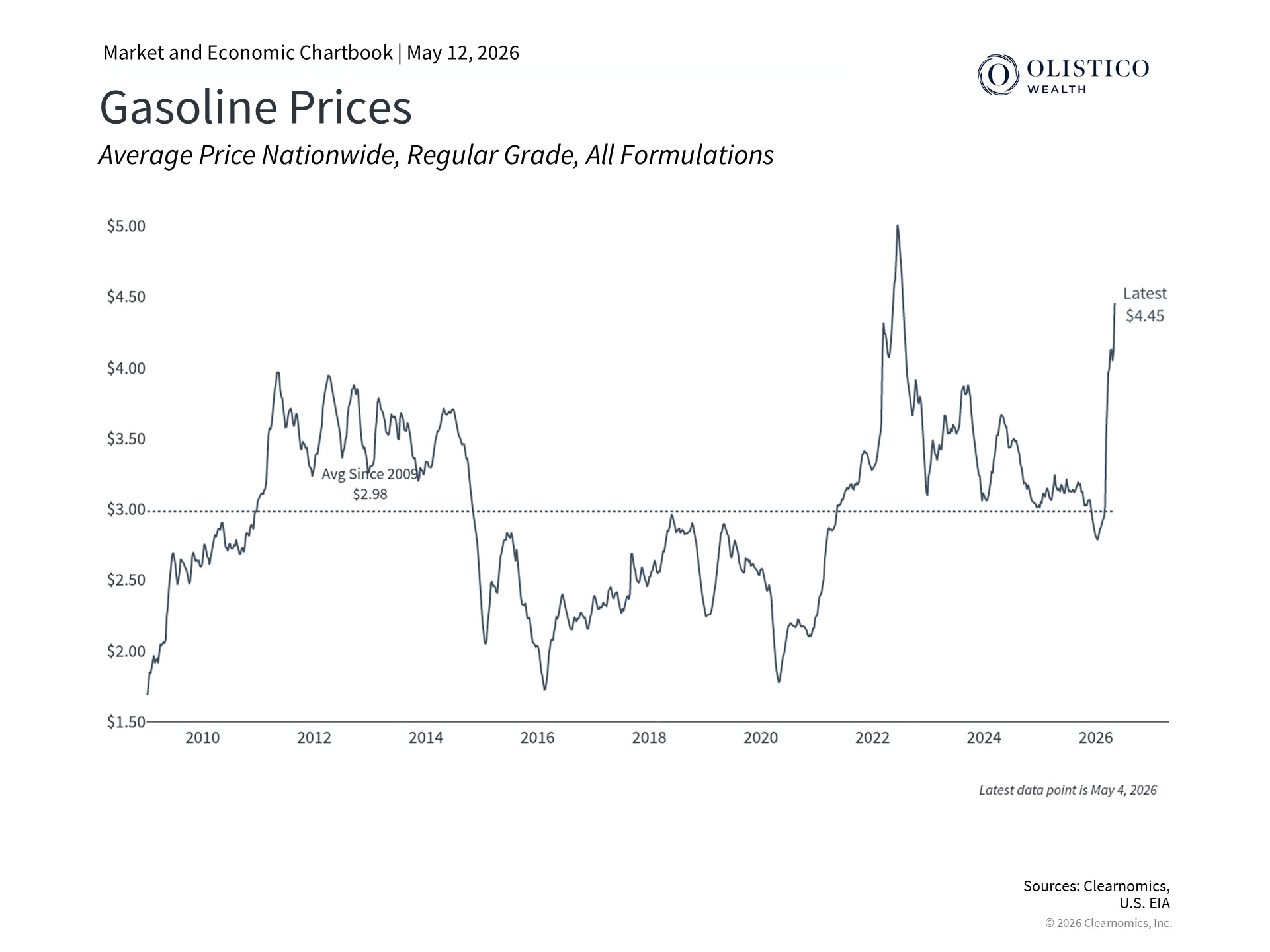
The conflict in Iran has had a direct impact on American households through rising fuel costs. The national average for regular unleaded gasoline has climbed to around $4.50 per gallon, with prices in some regions already exceeding $6 per gallon.1 Because energy costs feed directly into the Consumer Price Index, headline inflation has risen, complicating what had been an improving economic outlook.
However, the global energy landscape has changed significantly since the 1970s oil shocks. The U.S. is now the world’s largest energy producer, pumping more than 13 million barrels of oil per day, which has reduced the economy’s sensitivity to foreign supply disruptions. Adding to this shift, the United Arab Emirates recently departed OPEC, highlighting the cartel’s declining cohesion. At its peak in the 1970s, OPEC accounted for at least half of global oil supply; today, that share is closer to one-third.2 While oil price spikes during geopolitical events remain a risk, OPEC’s reduced influence helps explain why the broader market reaction has been more contained.
Tariff policy continues to evolve through legal challenges
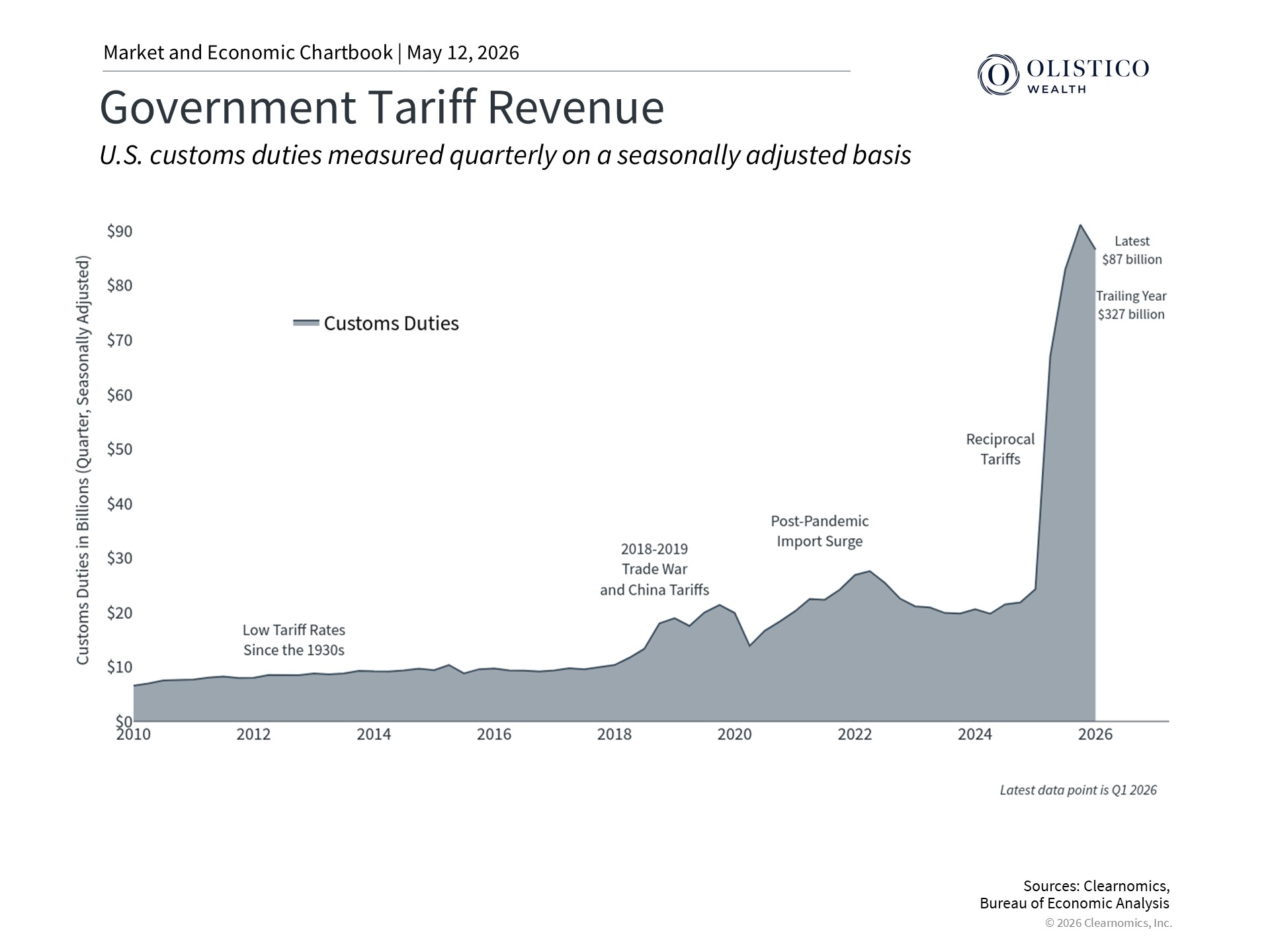
Tariff policy has remained the second major macro driver, continuing to face legal scrutiny. In February, the Supreme Court ruled that tariffs imposed under the International Emergency Economic Powers Act (IEEPA) are illegal.3 The administration then shifted to Section 122 of the Trade Act of 1974, but the U.S. Court of International Trade subsequently ruled those tariffs unlawful as well.4 The administration retains other legal avenues, such as Section 301 of the Trade Act of 1974, which permits tariffs following investigations into specific countries’ trade practices — investigations that have already been launched against dozens of nations.
Meanwhile, the refund process for previously collected tariffs is now underway. Customs and Border Protection has begun processing claims, with some importers already receiving payments.5 Estimates suggest total refunds could reach $160 to $170 billion — a development that would provide a meaningful boost to business cash flows and consumer spending.
Markets reaching new all-time highs despite ongoing uncertainty
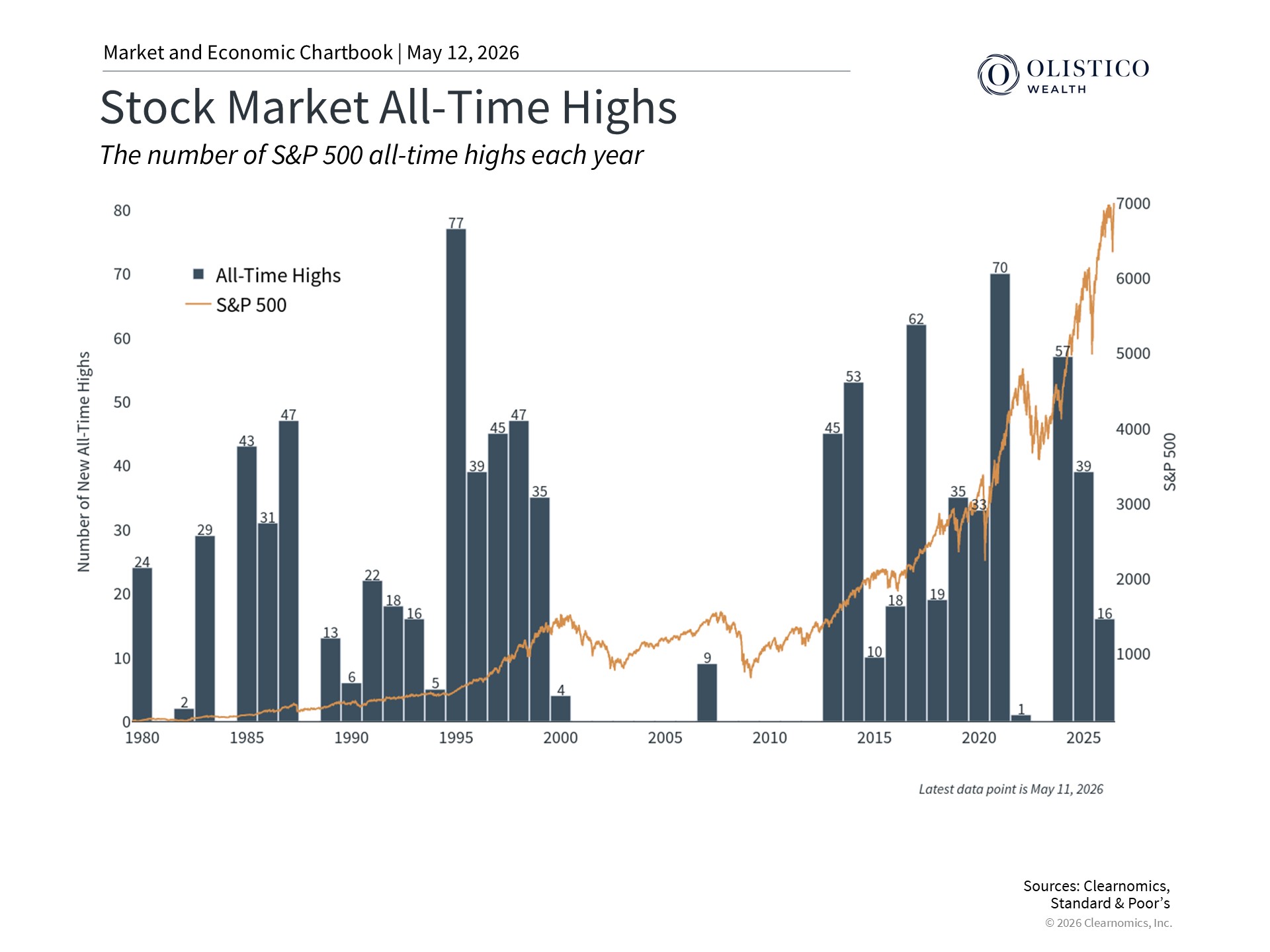
Despite the steady stream of macro headlines over the past year and a half, the S&P 500 has still achieved more than a dozen new all-time highs in 2026. As history shows, new market peaks are a normal feature of bull markets, even amid persistent investor concerns. What ultimately drives long-term market performance is the underlying strength of corporate earnings and economic growth — both of which have remained healthy.
The bottom line? Today’s market environment is shaped by global forces that tend to come and go. Staying invested with a well-constructed portfolio remains the best way to navigate uncertainty and achieve long-term financial goals.
References
- https://gasprices.aaa.com
- https://www.eia.gov/international/content/analysis/special_topics/
- https://www.congress.gov/crs-product/LSB11398
- https://www.cit.uscourts.gov/sites/cit/files/26-47.pdf
- https://www.cbp.gov/trade/programs-administration/trade-remedies/ieepa-duty-refunds
Index Description
The Standard & Poor’s 500 Index is a capitalization-weighted index of 500 stocks designed to measure performance of the broad domestic economy through changes in the aggregate market value of 500 stocks representing all major industries.
Disclosures
-Indices are unmanaged, and it is not possible to invest directly in an index.
-Equity markets are subject to significant volatility in response to macroeconomic developments, geopolitical shifts, and changes in monetary policy. Highlighting ‘all-time highs’ is intended to provide historical context and is not a guarantee of continued upward trends. Past performance is not indicative of future results, and all investments involve the risk of loss, including the possible loss of principal. Investors should not base investment decisions solely on the performance of a single index.
-While this communication highlights the performance of the S&P 500 Index, it is important to note that other market segments—such as small-capitalization stocks (e.g., the Russell 2000 Index) or international equities—may have experienced different performance outcomes and higher levels of volatility during the same period. Diversified benchmarks may show significantly different results based on sector concentration and market capitalization.
-Long-term investment strategies do not ensure a profit or protect against a loss in declining markets.
